What the Price Tracker shows
The Price Tracker helps you check, before selling a luxury brand item, "what it is selling for now" and "how that compares with the retail price." It brings together, model by model, the buying records completed at our two shops and the trends in each brand's current retail prices.
Each model page shows a records table that can be filtered by condition rank and by whether accessories are included, a line chart overlaying retail price trends and buying records, and a chart by condition rank. The source data can be downloaded as a CSV file, so you can also compare and save it yourself.
The figures shown are past completed transactions and are not a promise of future buying prices. Actual appraisal amounts vary with the condition of the individual item, its accessories and the market at the time of appraisal.
Models tracked
The models we currently track are listed below. Select a card to go to the market price page for that model.
 Hermèsバーキン30買取中央値¥2.67M
 Hermèsケリー28買取中央値¥2.61M
 Chanelマトラッセ25 ダブルフラップ チェーンショルダー買取中央値¥840K
 Rolexコスモグラフ デイトナ 126500LN買取中央値¥3.50M
 Rolexサブマリーナー デイト 126610LN買取中央値¥1.57M
 Cartierラブブレス(クラシック)買取中央値¥650K
Appraisal points for each brand are also explained in our Hermès buying guide, Chanel buying guide, Rolex buying guide and Cartier buying guide.
How to read the figures: median, condition rank and accessory category
It helps to know a few terms when reading the figures on the market price pages. Here we set out the definitions common to all pages.
Why the median rather than the average?
The median is the value that falls exactly in the middle when the buying records for the compilation period are arranged in order of amount. A single nearly unused item, or one in a rare material or color, can push the average up considerably.
Because the median is less affected by such extreme records, we use it as a guide to "what a typical item is selling for." We also show the number of records, so please treat models with few records as a rough reference only.
Condition rank (S / A / AB / B / C)
The condition rank is the rating assigned by our appraiser after checking the exterior, interior, hardware and functions at the time of appraisal. It follows the same criteria across brands and item types, as below.
| Rank | Guideline | Typical condition |
|---|---|---|
| S | Unused or nearly unused | Protective film still attached; almost no sign of use |
| A | Excellent condition with little sign of use | Used only a few times; no noticeable scratches or loss of shape |
| AB | Signs of use but in good condition | Slight wear on corners or hardware; fine minor scratches |
| B | Signs of use throughout | Corner wear, loss of shape, soiled interior, scratches requiring polishing |
| C | With defects | Tears, heavy discoloration, missing parts, malfunction, etc. |
Accessory category (full set / partial set / item only)
Because accessories tend to affect appraisal amounts, we record buying records in three categories. The categories are defined as follows.
| Category | Description |
|---|---|
| Full set | All main accessories from purchase, such as the box, dust bag, warranty card (guarantee card) and receipt, are present |
| Partial set | One or more of the main accessories are missing (e.g., the box is present but the warranty card is not) |
| Item only | Appraised as the item alone, with no accessories |
Buy-to-retail ratio (median buying price ÷ current retail price)
The buy-to-retail ratio is the median buying price for the compilation period divided by the current Japan retail price at that time. It shows "at what level relative to the retail price an item is selling," and offers a clue for comparing popularity trends between models.
When a brand revises its prices, the retail price in the denominator changes, so the ratio moves even if the buying price stays the same. Our charts overlay retail price trends and buying records, so please check them together.
Key point
A higher buy-to-retail ratio suggests that demand for the model continues on the secondhand market, but individual items vary considerably. We recommend filtering the table by the condition rank and accessory category closest to your own item.
Where does the data come from?
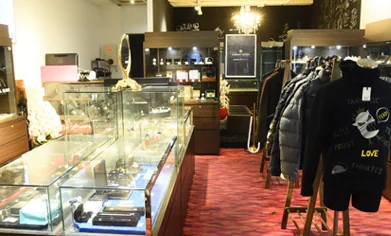
Buying records are based on transactions completed at our Diamond Seven Shinsaibashi and Luxury Seven shops, and are published in a form processed so that individuals cannot be identified. Retail prices are checked against the prices listed on each brand's official website and recorded together with the date checked.
Details of what is included, exclusion criteria and processing methods are set out in "How we handle price data" in our site policy. Information on our two shops is available in Our Shops.
How often is it updated?
The Price Tracker is updated regularly at least once a month. In addition, when a brand revises its Japan retail prices, we update the retail price trend table and charts as soon as we confirm the revision.
Each model page shows its last updated date. When considering a sale, please also take into account how recent the update is.
Please note
The records shown are past transactions, and amounts vary with the timing of the appraisal even under the same conditions. Please confirm the exact amount through an in-store appraisal, buying by mail or a LINE photo appraisal.
Making the most of the Price Tracker
- Estimate your item's condition rankUsing the definitions table above, estimate the closest rank based on corner wear, scratches and the condition of the hardware.
- Gather the accessories and check the categoryCheck the box, dust bag, warranty card and so on at hand, and determine whether you have a full set or a partial set.
- Filter the table on the model pageFilter by condition rank and accessory category to see records under similar conditions.
- Confirm the actual amount with our appraisalMarket prices are only a guide. Please make your final decision based on an appraisal of the actual item.
If you are unsure whether to sell or take out a pawn loan, please also see The difference between a pawn loan and selling. For the differences between our two shops, see Which shop to choose.